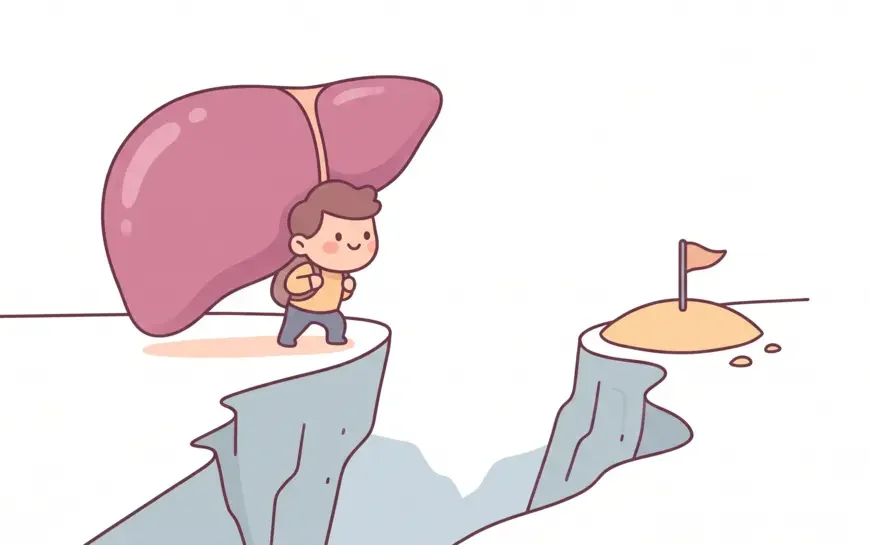
A few semesters ago, a student named Sarah sat in my introductory Korean class holding her textbook with a look of total panic. We were about to dive into Korean sentence structure, and she looked up at me and confessed, “Anna, looking at all these grammar rules makes me feel like I’m standing at the foot of Mount Everest. I don’t even know where to start.”
I smiled, handed her a hot cup of tea, and told her a short phrase every single child in Korea grows up hearing: “시작이 반이다” (Sijagi banida), which literally translates to “The Beginning Is Half.”
If you’ve ever hesitated to start a new project, learn a language, or make a big life change because the road ahead looked impossibly long, this phrase is for you. In Korean culture, “The Beginning Is Half” is much more than a catchy motivational quote. It is a deeply rooted mindset that helps us overcome paralysis by analysis and take that crucial first step.
After ten years of guiding international students through their Korean learning journeys, I’ve seen this exact proverb transform the way people approach daunting goals. Let’s break down what this famous proverb really means, where its wisdom comes from, and how you can use it in your daily life.
1. Breaking Down the Phrase: What “The Beginning Is Half” Literally Means
To understand why this phrase hits so deeply, let me show you how simple the Korean words are when we peel them back:
- 시작 (Sijak): The noun meaning “start” or “beginning.”
- 이 (i): The subject-marking particle attached to starting nouns.
- 반 (Ban): The noun meaning “half” (50%).
- 이다 (Ida): The verb form meaning “to be.”
Put them together, and you get 시작이 반이다: “Starting is already half the battle.”
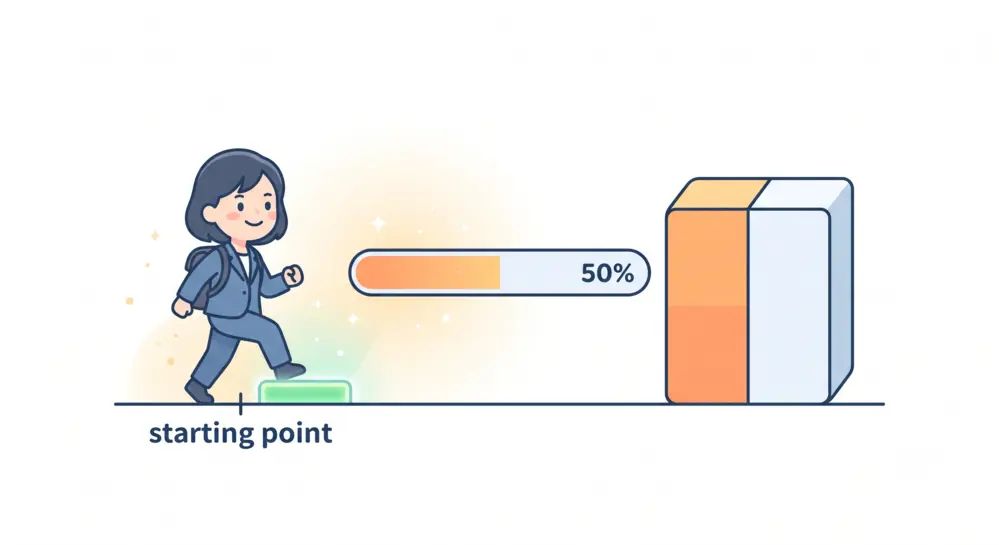
When native speakers say “The Beginning Is Half,” we are not making a mathematical statement. We know that opening a textbook doesn’t magically complete 50% of your homework. Instead, it acknowledges a psychological truth we all face: the friction of starting is almost always heavier than the work itself. Once you overcome that inertia, the remaining half naturally gains momentum.
2. The Mindset Behind “The Beginning Is Half”: Overcoming Fear of Failure
In my years running a language blog and teaching adult learners, I’ve noticed one common trait among people who struggle to learn Korean: perfectionism. Students spend weeks researching the “perfect” textbook, downloading ten different study apps, or worrying if their accent will sound funny.
They get stuck before they even hit the starting line.
This is precisely why “The Beginning Is Half” is used as the ultimate Korean encouragement. Culturally, Korean society moves fast (what we call the ppalli-ppalli culture), and there is a strong value placed on taking immediate action rather than sitting around overthinking.
By framing the start as half the journey, this proverb delivers two comforting messages:
- You’ve done the hardest part: Deciding to act and taking that first step requires the most courage.
- Perfection isn’t required: You don’t need a flawless plan to start; you just need to begin, and the rest will fall into place as you move forward.
3. How Native Koreans Use “시작이 반이다” in Daily Life
In everyday speech, Koreans use 시작이 반이다 (The Beginning Is Half) when encouraging friends, coworkers, or family members who are nervous about starting something new.
You’ll often hear it paired with phrases like “마음먹기에 달렸다” (it’s all about your mindset) or “우선 해봐!” (just try it first!).
Here are two realistic conversation examples to see how naturally it fits into daily Korean dialogue:
Conversation 1: Starting a New Exercise Routine
- A: 내일부터 헬스장 다니기로 했는데, 꾸준히 할 수 있을지 걱정돼.(I decided to start going to the gym tomorrow, but I’m worried if I can stick with it.)
- B: 걱정 마! 등록한 것만으로도 대단해. 시작이 반이다라는 말도 있잖아!(Don’t worry! Just signing up is amazing. You know what they say—The Beginning Is Half!)
Conversation 2: Taking on a Big Project at Work
- A: 이번에 새로 맡은 프로젝트 분량이 너무 많아서 어디서부터 손대야 할지 모르겠어요.(The new project assigned to me has so much workload, I don’t even know where to start.)
- B: 우선 첫 번째 파일부터 열어보세요. 시작이 반이라고, 막상 시작하면 금방 끝날 거예요.(Just open the first file for now. As the saying goes, The Beginning Is Half—once you actually get going, you’ll finish in no time.)
4. “The Beginning Is Half” vs. Western Idioms: Is There an Exact English Match?
When my native English-speaking students first hear 시작이 반이다, they often ask: “Is this the same as ‘Well begun is half done’?”
The short answer is: close, but not quite identical!
While Aristotle’s famous quote “Well begun is half done” emphasizes doing a task correctly or thoroughly right from the start, the Korean proverb “The Beginning Is Half” puts almost all its focus on the act of starting itself, regardless of how messy or imperfect that start might be.
Another English equivalent people bring up is “A journey of a thousand miles begins with a single step.” While that quote focuses on the vast length of a journey, 시작이 반이다 gives you immediate credit: the moment your foot touches the pavement, you’re already 50% done in spirit!
Anna’s Pro-Tip: How to Use “시작이 반이다” for Your Language Journey
If you’re reading this post right now because you’ve been wanting to learn Korean but keep putting it off, take this as your official sign to start today.
You don’t need to memorize a hundred vocabulary words today. Just learn five. You don’t need to master complex honorifics tonight. Just practice saying 안녕하세요 (Annyeonghaseyo) out loud in front of your mirror.
Remember: 시작이 반이다 (The Beginning Is Half). By opening this article and taking an interest in Korean culture, you have already crossed the hardest threshold. You are already halfway there!
What is one small goal you’ve been hesitating to start? Drop it in the comments below—I’d love to cheer you on and help you take that first 50%! Don’t forget to bookmark allaboutkorea101.com for more warm, practical Korean language and culture insights.