A couple of summers ago, during a culture class in Seoul, one of my students—let’s call him Marcus—spent his entire lunch break staring at a shop window in Insadong. Inside was a breathtaking, handcrafted vintage Korean tea set. When I walked over and asked if he was going to buy it, he laughed nervously, pulled out his empty wallet, and said, “Anna, I want it so badly, but it’s totally out of my budget. It’s just pie in the sky.”
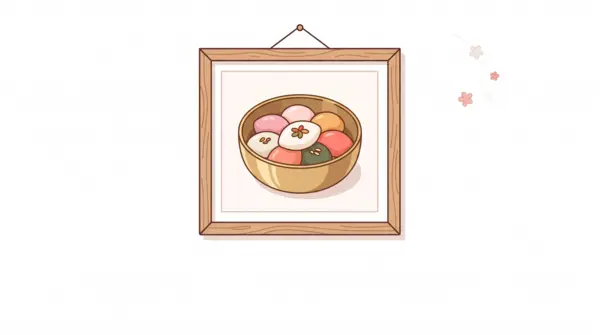
I chuckled and told him, “In Korea, we have an exact phrase for that feeling, but instead of pie, we use food from our own traditional kitchen: 그림의 떡 (Geurimui tteok), which literally means A Rice Cake in a Picture.”
We’ve all been there—drooling over a dream sports car, scrolling through luxury vacation rentals in Jeju Island, or admiring a limited-edition K-pop album that sold out in three seconds. When something is visually tantalizing right in front of you, yet completely unattainable in reality, Koreans call it A Rice Cake in a Picture (그림의 떡).
In my ten years of teaching Korean to learners from all over the world, I’ve found that expressions like A Rice Cake in a Picture are the ones that stick with students the longest. They don’t just teach you vocabulary; they give you a glimpse into how Koreans historically viewed wealth, desire, and everyday life. Let’s dive into the linguistic breakdown, cultural origins, and how you can naturally drop this expression into your next Korean conversation!
1. Linguistic Breakdown: What “A Rice Cake in a Picture” Actually Means
To understand how this phrase is built, let’s break down the three short Korean words that make up 그림의 떡:
- 그림 (Geurim): A noun meaning “picture,” “painting,” or “drawing.”
- 의 (ui): The possessive particle, equivalent to “of” or “‘s” in English.
- 떡 (Tteok): Traditional Korean rice cake, a beloved chewy staple made from steamed grain flour.
When you put them together, 그림의 떡 literally translates to “A Rice Cake in a Picture.”
Imagine being starving and sitting in front of a masterfully painted oil canvas depicting a steaming, warm plate of food. No matter how realistic the brushstrokes are, or how delicious it looks, you can’t pick it up, chew it, or satisfy your hunger with it. It’s purely visual satisfaction with zero practical fulfillment.
That is the essence of A Rice Cake in a Picture: an object, goal, or dream that you can clearly see and admire, but cannot actually possess or enjoy.
2. The Cultural Origin: Why Choose a Rice Cake?
My Western students often ask: “Anna, why a rice cake specifically? Why not a bowl of soup or a piece of fruit?”
To answer that, we have to travel back in time to traditional Korea. Historically, daily meals for ordinary folk consisted mostly of simple grains, vegetables, and soup. Rice cakes (떡), on the other hand, required significant time, expensive polished rice, and intensive manual labor to pound and steam.
Because of this, tteok was not an everyday snack—it was a luxury saved for big celebrations like Lunar New Year (Seollal), harvest festivals (Chuseok), weddings, and baby birthdays.
For a commoner going through a harsh winter or a crop shortage, seeing a painting of a rich, colorful rice cake was a painful reminder of something far beyond their reach. You could look at it all day long, but you could never taste it. Over time, A Rice Cake in a Picture (그림의 떡) naturally became the country’s most iconic metaphor for unattainable desires.
3. How Native Speakers Use “그림의 떡” in Everyday Conversations
In modern Korea, people use A Rice Cake in a Picture (그림의 떡) constantly when talking about expensive luxury items, unobtainable concert tickets, dream jobs with absurd requirements, or high-end real estate in Gangnam.
In conversation, you’ll usually hear it combined with the verb 이다 (to be) or 같다 (to seem like):
- “그림의 떡이야.” (It’s a rice cake in a picture / It’s out of my reach.)
- “나한테는 완전히 그림의 떡이지.” (For me, it’s totally a picture rice cake.)
Here are two natural daily dialogues so you can see how it sounds in context:
Dialogue 1: Looking at High-End Tech or Luxury Goods
- A: 이 신형 스마트폰 디자인 진짜 잘 나왔다. 카메라 기능도 대박인데?(This new smartphone design came out so well. The camera specs are insane!)
- B: 그러게. 근데 가격이 200만 원이 넘어서 나한테는 그냥 그림의 떡이야.(I know right. But it costs over 2 million won, so for me it’s totally a rice cake in a picture.)
Dialogue 2: Talking About Impossible Real Estate Prices
- A: 한강이 보이는 이 아파트 단지 진짜 예쁘다. 여기서 살면 얼마나 좋을까?(This apartment complex overlooking the Han River is so gorgeous. How amazing would it be to live here?)
- B: 에이, 꿈 깨! 평범한 직장인한테는 그림의 떡이지 뭐.(Come on, wake up! For an average office worker, that’s just a pie in the sky.)
4. “A Rice Cake in a Picture” vs. English Idioms: Pie in the Sky or Sour Grapes?
When my English-speaking students first try to map 그림의 떡 to English idioms, they often ask about two common phrases: “Pie in the sky” and “Sour grapes.”
Let’s clarify the exact nuances so you never mix them up:
- “Pie in the Sky” (Most Accurate Match):Both A Rice Cake in a Picture and “pie in the sky” describe something wonderful that you wish you could have, but is realistically impossible or unachievable right now. The sentiment is longing combined with realistic acceptance.
- “Sour Grapes” (Different Emotion!):“Sour grapes” comes from Aesop’s fable, where the fox can’t reach the grapes and pretends he didn’t want them anyway (“They were probably sour anyway!”). 그림의 떡 (A Rice Cake in a Picture) does NOT imply bitterness or pretending you don’t like the object. You genuinely still want it—you just know you can’t have it!
Anna’s Pro-Tip: Turn Your “Picture Rice Cakes” Into Reality!
When learning a foreign language, grammar books can sometimes feel like A Rice Cake in a Picture (그림의 떡)—you see native speakers chatting fluently on YouTube or in K-dramas, and it feels like a distant dream you’ll never reach.
But here is my favorite piece of advice after a decade in the classroom: fluency isn’t an unachievable picture on the wall. Every time you memorize a single idiom like 그림의 떡, you’re taking a real bite out of that rice cake!
What is one thing in your life right now that feels like A Rice Cake in a Picture? A dream trip to Seoul? A luxury handbag? A concert ticket? Let me know in the comments below—I read and reply to all of them!
And if you enjoyed this cultural deep-dive, make sure to bookmark allaboutkorea101.com for more practical, real-world Korean language lessons.
Reference & Official Source:
For official definitions and standard Korean language guidelines, feel free to visit the [National Institute of Korean Language].