If you’ve watched more than a handful of K-dramas, you’ve almost certainly heard a character deliver this line with a shy smile: “Do you want to eat ramyeon before you go?”
On the surface, it sounds like an innocent invitation for late-night comfort food. But in Korean pop culture, asking if someone wants to eat ramyeon is the ultimate indirect romantic proposition—the Korean equivalent of “Netflix and chill.”
In my 10 years of running Korean culture blogs and teaching the language to students around the globe, this is always one of the first slang expressions people ask me to decode. Why ramyeon? Where did this phrase originate, and what does it reveal about how Koreans express attraction? Let’s dive into the fascinating world of Korean subtext, starting with the iconic line every K-drama fan needs to know.
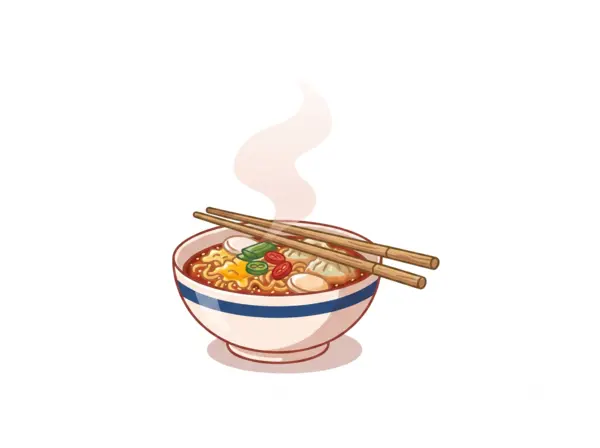
The Cinema Origin: How “Want to Eat Ramyeon?” Was Born
Every cultural trope has a birthplace, and this one traces back to a specific moment in Korean cinema history. The line was first popularized in the 2001 romantic drama movie One Fine Spring Day (봄날은 간다), directed by Hur Jin-ho.
In the film, the female protagonist, played by Lee Young-ae, invites the male lead (Yoo Ji-tae) into her apartment after a night out by casually asking, “Do you want to eat ramyeon?” (라면 먹고 갈래요?).
At that time, the phrasing wasn’t an established pickup line. It was just an ingenious screenwriting choice that captured the subtle tension of two people wanting to spend more time together without directly stating their romantic intentions. The movie became a classic, and over the next two decades, the line transformed into a widely recognized cultural meme referenced across TV shows, songs, and mainstream media.
Why Ramyeon? Understanding High-Context Culture and Nunchi
To understand why asking if you want to eat ramyeon works so well as a romantic icebreaker, you need to understand Korean social dynamics. Korea is a high-context culture where indirect communication is highly valued. Direct romantic advances can sometimes feel overly aggressive or embarrassing if rejected.
Ramyeon is the perfect cover story for a few practical reasons:
- It’s fast and casual: Instant noodles take less than five minutes to cook. It doesn’t require a elaborate meal prep or formal setup.
- It’s late-night comfort food: People rarely eat ramyeon together at 11 PM unless they are already close or want to get closer.
- It offers an exit strategy: If the other person declines, nobody loses face. The host can simply act as though they were genuinely just hungry for noodles.
This ability to gauge intent without explicit speech relies heavily on nunchi (눈치)—the Korean art of reading the room, observing body language, and understanding unspoken context.
Korean Grammar Spotlight: Decoding the Subtext in “~고 갈래?”
From a Korean language learning perspective, this famous line offers a great practical grammar lesson. Let’s break down the exact structure used when someone asks if you want to eat ramyeon:
“라면 먹고 갈래?” (Ramyeon meok-go gal-lae?)
- 라면 (Ramyeon): Instant noodles.
- 먹다 (Meok-da): To eat.
- ~고 (~go): A connective ending meaning “and” or “and then.”
- 가다 (Ga-da): To go (or leave).
- ~ㄹ래? (~l-lae?): An informal, conversational grammar pattern used to ask about the listener’s intention (“Do you want to…?”).
Notice the literal translation: “Do you want to eat ramyeon and then leave?”
The grammar implies that the visit is temporary, keeping the offer casual. In polite or formal settings (or early in dating), you will hear the honorific version: “라면 먹고 갈래요?” (Ramyeon meok-go gal-lae-yo?).
Modern Variations in K-Dramas: Cats, Tea, and Netflix
As the ramyeon line became so famous that everyone recognized its hidden intention, screenwriters began creating fresh, modernized variations. If a character says any of these in a modern K-drama, know that the subtext remains exactly the same:
- “Do you want to see my cat?” (우리 집 고양이 보러 갈래?)Extremely popular in recent romance dramas. It provides a sweet, innocent excuse to invite someone over while keeping the mood light.
- “Do you want to drink a cup of tea?” (차 한 잔 하고 갈래?)A slightly more mature or classical variation often seen in workplace or melodramatic K-dramas.
- “Do you want to watch Netflix?” (넷플릭스 보고 갈래?)The direct western influence imported straight into contemporary Korean dating slang.
When you spot these lines during a scene, pay attention to the lighting, music, and actor micro-expressions—the drama director is signaling that a major romantic shift is about to happen between the main characters.
Classic K-Drama Moments Featuring the “Ramyeon” Trope
To see how flexible this line is, let me share a couple of iconic drama scenes where this line created unforgettable tension or comedy:
- What’s Wrong with Secretary Kim (김비서가 왜 그럴까): When Park Min-young’s character invites Park Seo-joon inside for ramyeon, he takes it as a profound romantic sign, leading to hilariously over-the-top internal monologues while trying to stay calm while eating simple noodles.
- Crash Landing on You (사랑의 불시착): Gu Seung-jun (Kim Jung-hyun) explains the subtle hidden meaning of the phrase to Seo Dan (Seo Ji-hye), creating a memorable moment of cultural cross-talk that fans still quote today.
These scenes work so well precisely because the audience shares the secret understanding of what asking to eat ramyeon truly implies!
Educator’s Advice: How to Enjoy K-Dramas like a Native Speaker
When learning Korean through K-dramas, don’t stop at the literal dictionary definitions on subtitle tracks. Korean is a language packed with emotional nuance (jeong / 정) and context-dependent phrases.
Here is my recommended formula for capturing these cultural gems while watching:
- Keep a digital note of repeating lines: Whenever a phrasing sounds oddly specific or makes characters blush, write down the Romanization or Hangul.
- Look beyond direct English subtitles: Subtitles often translate the literal meaning (“Do you want noodles?”) rather than the cultural weight (“Are you interested in me?”).
- Pay attention to speech levels: Notice if the speaker switches from formal (~요) to casual language when delivering these lines—that shift is where the real intimacy happens.
Understanding these hidden layers turns watching K-dramas from simple entertainment into an enriching language-learning journey. So the next time a main character asks if their love interest wants to eat ramyeon, you’ll be in on the secret right along with native Korean viewers!