If you’ve watched more than ten minutes of any Korean romantic drama, you’ve undoubtedly heard a female protagonist look tenderly into a guy’s eyes and soft-whisper the word oppa. Or maybe you’ve watched a married couple playfully bicker on screen while addressing each other as yeobo or jagi.
Back when I started teaching Korean over a decade ago, one of my university students in Los Angeles, Sarah, came to class visibly bewildered. She told me, “Anna, I heard the female lead in my favorite romance K-Drama call her boyfriend oppa, but my Korean friend’s younger sister also calls her actual older brother oppa! Are people in Korea dating their brothers?!”
We both had a good laugh, but Sarah’s confusion highlighted a huge cultural gap. In Korea, terms of endearment aren’t just sweet nicknames—they are dynamic social markers shaped by age, relationship status, and emotional intimacy.
Whether you want to understand your favorite K-Drama dialogue without subtitles or navigate real-life Korean relationships, decoding terms like oppa, jagi, and yeobo is essential. Let’s break down what these iconic words actually mean, how they evolved, and the crucial social rules behind using them correctly!
1. The Magic and Nuance of “Oppa” (오빠) in K-Dramas
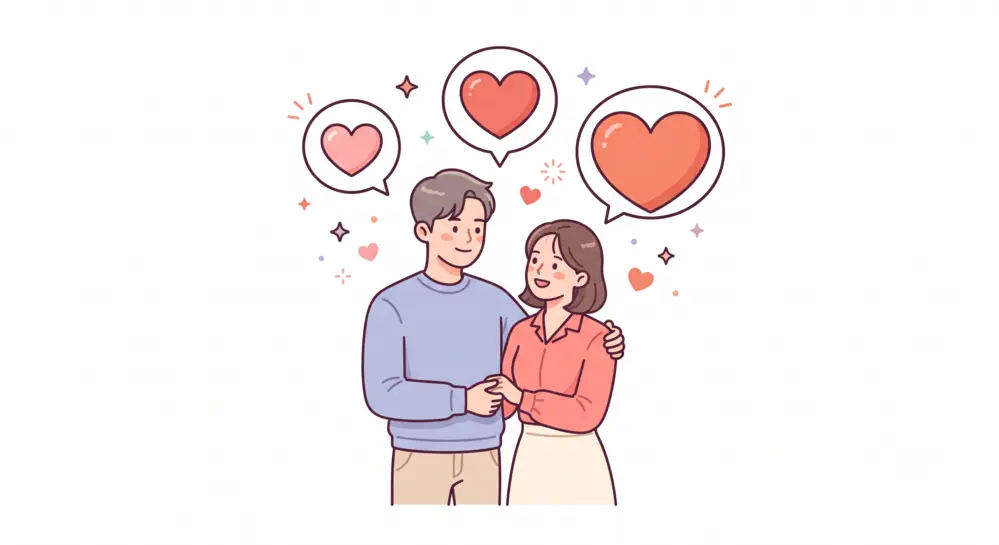
Literally speaking, oppa (오빠) means “older brother,” used exclusively by a female. However, as any K-Drama enthusiast knows, the word has long line-crossed its original family definition to become one of the most famous romantic labels in modern Asian pop culture.
Historically, a Korean woman would only call her biological older brother or a very close older male cousin oppa. But around the late 1980s and 1990s, youth culture began shifting. Female university students started using oppa to address close male upperclassmen (sunbae) and trusted older male friends. Over time, that emotional closeness naturally sparked romance, turning oppa into the go-to term for a woman’s boyfriend or husband, provided he is older than her.
In K-Dramas, the specific tone in which a female character says oppa tells you everything about their current relationship dynamic:
- Short & Crisp (“Oppa!”): She’s annoyed, teasing, or demanding a quick favor from her male friend.
- Soft & Melodic (“Oppa~”): She’s actively flirting or showing aegyo (playful cuteness).
- Tearful & Desperate (“Oppa…”): The emotional climax of a melodrama when secrets are revealed.
However, there is an absolute linguistic rule: a woman should never call a guy oppa if he is younger than her, no matter how deeply in love they are! In those cases, she will address him by his first name or switch to a gender-neutral romantic title.
2. “Jagi” (자기): The Gender-Neutral “Sweetheart” for Couples
While using oppa requires an age gap where the man is older, what happens when a couple is the exact same age, or when the woman is the older one in the relationship? That is precisely where jagi (자기) comes into play.
Literally, jagi translates to “self” or “oneself” in Korean, but in a romantic context, it functions as “honey,” “sweetheart,” or “babe.” It is the most versatile, gender-neutral term of endearment used among dating couples and young married partners.
Unlike oppa, which can only be spoken by females to males, jagi flows effortlessly both ways:
- A boyfriend can freely call his girlfriend jagi.
- A girlfriend can call her boyfriend jagi.
- Both partners often add the affectionate vocal suffix -ya to make it jagiya (자기야), which makes it sound even sweeter.
In K-Dramas, when two leads stop using polite formal titles and casually drop their first jagiya, it signals a major emotional milestone to the audience: they are no longer just testing the waters; they are officially a couple.
3. “Yeobo” (여보): Deep Commitment in Married Life
If you’re watching a K-Drama centered around family dynamics or married life, you will constantly hear spouses addressing each other as yeobo (여보).
The word yeobo translates directly to “honey” or “darling,” but it carries a strict social boundary: it is reserved almost exclusively for married couples. You will rarely hear dating partners use yeobo unless they are humorously roleplaying or dreaming about their future wedding day.
Linguistically, many scholars believe yeobo originates from the historical Korean phrase yeogio-bo-sio (여기 보시오), which translates to “look here, please.” Over centuries of cultural refinement, it softened into a warm, respectful address used between husband and wife to show mutual care and lifelong devotion.
While a wife may still affectionately call her husband oppa if he is older than her, switching to yeobo in front of parents, children, or guests reflects emotional maturity and marital respect.
4. Essential Social Rules: When NOT to Use “Oppa”
In my 10 years of guiding global students through Korean language nuances, I’ve seen many enthusiastic learners make awkward blunders by assuming oppa can be used with any friendly Korean male. To protect your social etiquette, keep these three rules in mind:
- Avoid It in Professional Settings: Never call an older male boss or coworker oppa during office hours. Stick to their professional title plus -nim (e.g., Manager Kim -> Kim Bujan-nim). Using oppa at work can sound highly unprofessional or overly flirtatious.
- Never Use It with Strangers: Even if a male waiter, barista, or taxi driver looks slightly older than you, do not address him as oppa. Use polite public titles like sajang-nim (store owner) or jeogi-yo (excuse me).
- Be Mindful of Large Age Gaps: Oppa is typically used within a reasonable age bracket (usually 1 to 10 years older). Calling a man in his 50s oppa when you are 20 can sound sarcastic or inappropriate unless you share an extraordinarily close family-like bond.
Anna’s Pro-Tip: Listen for Nuance in Your Next K-Drama!
Understanding terms of endearment like oppa, jagi, and yeobo gives you a front-row seat to the emotional subtext of K-Dramas. The next time you stream a series, pay close attention to when characters drop formal titles and switch to romantic labels—it often hints at major plot developments long before they are spoken outright!
What term of endearment is your absolute favorite to hear in K-Dramas? Or have you ever had a funny mix-up trying to use oppa in real life? Leave a comment below—I read and reply to every single one!