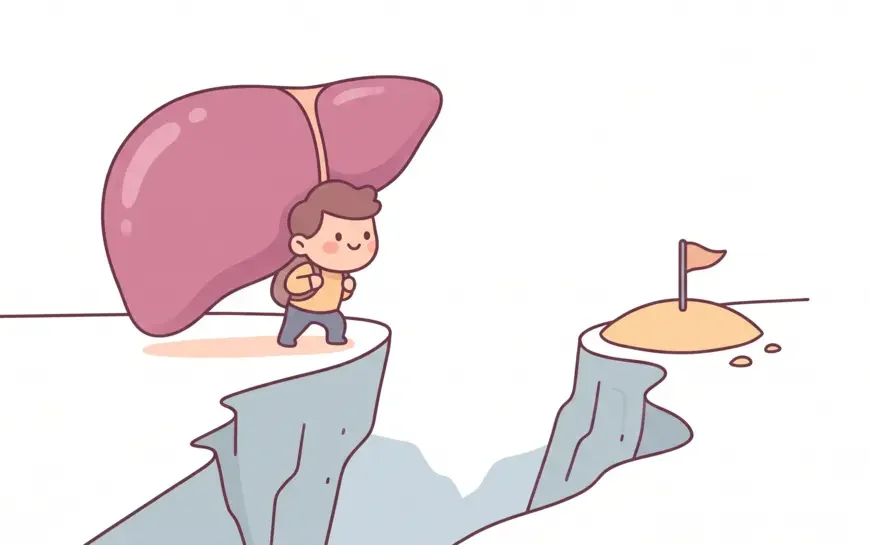
Have you ever postponed a critical task—like backing up your computer or servicing your car—only to deeply regret it when disaster strikes? In English, you might say you’re “closing the barn door after the horse has bolted.”
In Korea, we have an almost identical, timeless proverb that every native speaker uses: 소 잃고 외양간 고치기 (So il-go oeyang-gan go-chi-gi), which literally translates to “Fixing the stable after losing the cow.”
Whether you are watching K-dramas, reading Korean news, or chatting with native friends, you will encounter this expression whenever someone tries to fix a problem far too late.
In this complete guide, we will break down the exact meaning of “Fixing the stable after losing the cow,” explore its cultural origins in traditional Korea, and show you how to use it naturally in everyday conversations!
What Does “Fixing the Stable After Losing the Cow” Mean?
At its core, “Fixing the stable after losing the cow” describes taking preventive measures or attempting to repair something after damage or loss has already occurred, making the effort essentially useless for the situation at hand.
Let’s break down the literal vocabulary word by word:
- 소 (So): Cow / Ox
- 잃다 (Il-da): To lose (conjugated as 잃고 = losing and…)
- 외양간 (Oeyang-gan): Cattle shed / Stable / Barn
- 고치다 (Go-chi-da): To fix / To repair (conjugated as 고치기 = fixing)
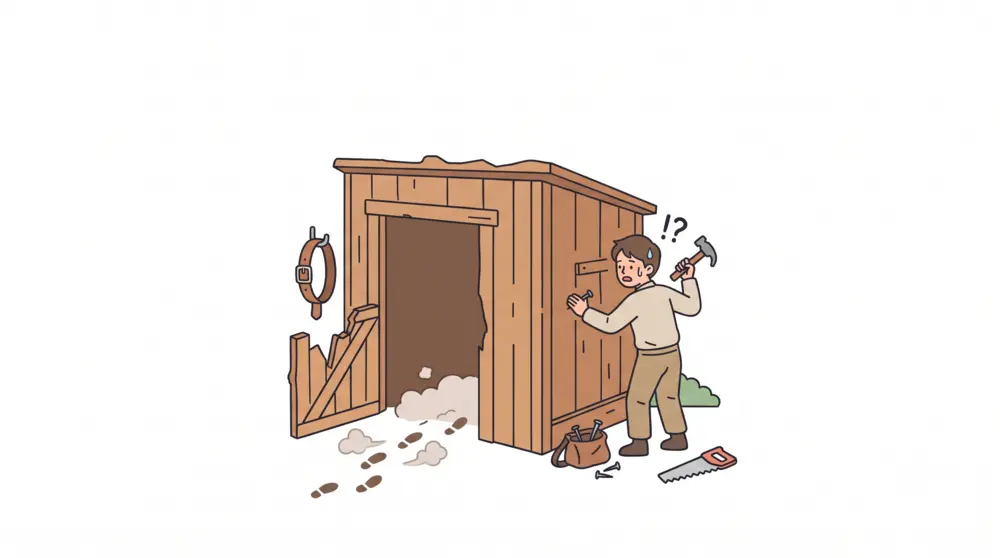
Putting it all together, if a farmer neglects a broken fence, a cow might escape or get stolen at night. Fixing the fence after the cow is already gone doesn’t bring the cow back. It highlights the frustration of foolish delay and the importance of prevention over belated regret.
The Historical Origin of “소 잃고 외양간 고치기”
To truly understand this proverb, it helps to look at traditional Korean history. For centuries, Korea was an agrarian society where agriculture was the foundation of daily life.
In ancient Korea, a cow (소) was not merely livestock or food; it was one of the most valuable financial assets a family could own. Oxen plowed the heavy fields, transported heavy loads, and sustained entire households for generations. Losing a cow was a financial catastrophe that could ruin a family’s livelihood.
Because cows were so essential, farmers built sturdy wooden or mud stables (외양간) right next to their homes. However, careless farmers who ignored cracks in the barn wall often woke up to empty stables.
When neighbors saw a distraught farmer hammering nails into an empty barn, they would shake their heads and say, “You’re fixing the stable after losing the cow.” Over time, this vivid agricultural lesson evolved into one of Korea’s most iconic wisdom sayings.
Real-Life Examples: How Native Koreans Use It Today
Even though modern Koreans live in high-tech cities, “Fixing the stable after losing the cow” remains extremely common in modern everyday scenarios. Here are a few relatable examples:
Scenario 1: Data & Tech Negligence (데이터 및 기술 관리 소홀)
Minho: “My laptop crashed last night and I lost my entire graduation thesis! I’m buying a 2TB cloud backup subscription right now.”
Sujin: “Now? That’s really 소 잃고 외양간 고치기… You should have backed it up last week!”
Scenario 2: Health & Lifestyle (건강 및 라이프스타일)
A: “I ended up in the emergency room because I ignored my toothache for three months. Now I need a $2,000 root canal.”
B: “Going to the dentist after the pain becomes unbearable is classic 소 잃고 외양간 고치기. Prevention is always cheaper!”
Sample Dialogue to Practice
Here is a short, natural conversation to help you see how the idiom flows in spoken Korean:
A: 수진 씨, 회사 서버가 해킹당해서 중요한 데이터가 다 날아갔대요.
(Sujin, I heard the company server got hacked and all important data was lost.)
B: 저런… 평소에 보안 시스템을 업데이트하라고 그렇게 말했는데!
(Oh no… I kept telling them to update the security system on a regular basis!)
A: 맞아요. 이제서야 보안 회사랑 계약하고 난리예요.
(Right. Only now are they making a fuss and hiring a security company.)
B: 완전 소 잃고 외양간 고치는 격이네요.
(That’s completely a case of fixing the stable after losing the cow.)
English Counterparts vs. Korean Nuance
If you are an English speaker, you might wonder how this phrase compares to English idioms you already know:
- “Closing the barn door after the horse has bolted”
- Comparison: This is the exact 1-to-1 English equivalent! Both utilize farm animals and belated barn repairs to convey the same message.
- “Crying over spilled milk”
- Nuance Difference: While “crying over spilled milk” focuses on useless emotional regret, “Fixing the stable after losing the cow” specifically emphasizes taking useless action after it’s too late.
Essential Vocabulary Recap for Korean Learners
Before you go, let’s review the key words and grammar points featured in this lesson:
| Korean Word | Pronunciation | English Meaning |
| 소 | So | Cow / Ox |
| 잃다 | Il-da | To lose |
| 외양간 | Oeyang-gan | Cattle stable / Barn |
| 고치다 | Go-chi-da | To fix / Repair |
| 소 잃고 외양간 고치기 | So il-go oeyang-gan go-chi-gi | Fixing the stable after losing the cow |
Key Grammar Point: -고 (And / Action Sequence)
In the expression 소 잃고, the grammar suffix -고 connects two actions in chronological order: Action A happens, and then Action B follows.
- Example: 소 잃(다) + -고 ➔ Losing the cow, AND THEN (fixing the stable).
Final Thoughts from Anna
As language learners, we often fall into the trap of procrastination—waiting until an exam is tomorrow before starting to study! Don’t end up fixing the stable after losing the cow when it comes to your Korean fluency. Practice a little bit every day, build your vocabulary step by step, and protect your progress!
Which Korean proverb should we explore next? Let me know in the comments below, and happy studying!