Learning how to say “sorry” in Korean is one of the most critical skills for anyone studying the language or planning a trip to South Korea. Unlike English, where “sorry” works in almost every situation, Korean social etiquette relies heavily on politeness levels, age, and social hierarchy. Saying the wrong form of “sorry” to a boss or an elder can accidentally sound disrespectful, while using an overly formal apology with close friends can feel awkward.
In this comprehensive guide, written from over a decade of Korean language education experience, you will master the 7 native ways to express apologies gracefully in any situation.
Formal Apologies: How to Say “Sorry” in Korean in Professional Settings
When you need to make a formal apology to a supervisor, an elder, a customer, or someone you don’t know well, you must use formal honorifics (Jondeatmal).
- 죄송합니다 (Joesonghamnida)This is the gold standard for formal apologies in South Korea. It literally translates to “I am feeling ashamed.” Use this in business environments, when addressing strangers, or when you make a mistake in public.
- 죄송해요 (Joesonghaeyo)A slightly softer version of Joesonghamnida. It is still polite and respectful, suitable for older acquaintances, colleagues, or casual workplace interactions.
Pro-Tip: If you are unsure which level of politeness to use, defaulting to 죄송합니다 is always the safest option to avoid offense.
Standard Polite: The Everyday Way to Say “Sorry” in Korean
If you are looking for a versatile way to apologize in everyday casual settings while remaining polite, this phrase is your best choice.
- 미안해요 (Mianhaeyo)This phrase comes from the root word Mian (미안), which means “unrest” or “sorry.” Adding the polite ending -yo makes it suitable for general daily interactions. You can use this with acquaintances who are around your age, younger colleagues at work, or taxi drivers.
While it is polite, avoid using Mianhaeyo with your boss, elderly strangers, or in high-stakes professional situations, as it may sound a bit too casual.
Casual Vibe: How to Say “Sorry” in Korean to Friends and Younger People
When hanging out with close friends, siblings, or people younger than you, using formal phrases can create awkward emotional distance. In these situations, informal language (Banmal) is expected.
- 미안해 (Mianhae)The most common casual way to say “sorry” among close friends. If you watch K-Dramas, you hear this phrase in almost every episode!
- 미안 (Mian)An ultra-casual, shortened version of Mianhae. Use this for very minor slip-ups with close friends—for instance, if you accidentally bump their arm or arrive two minutes late for lunch.
Deep Apologies: Asking for Serious Forgiveness in Korean
Sometimes a simple “sorry” isn’t enough, especially if you made a significant mistake or caused severe trouble. In these moments, you need phrases that express deep regret and ownership of the fault.
- 사과드립니다 (Sagwadeurimnida)Literally meaning “I offer you an apology,” this is an extremely formal phrase often used in written statements, corporate apologies, or official speeches.
- 진심으로 사과드립니다 (Jinsim-euro Sagwadeurimnida)“I sincerely offer my apologies.” Adding Jinsim-euro (sincerely) emphasizes your genuine remorse.
- 잘못했습니다 (Jalmothaessseumnida)Translating to “I have done wrong,” this phrase directly admits fault. You will often see this in K-Dramas when characters bow deeply while begging for forgiveness from elders or authority figures.
“Excuse Me” vs. “Sorry”: Avoiding Common Tourist Mistakes
English speakers often use “sorry” to get someone’s attention or to squeeze through a crowded subway. However, in Korean, there are specific phrases designated for these scenarios.
- 실례합니다 (Sillyehamnida)This translates to “I am committing a discourtesy” and functions exactly like “Excuse me.” Use this when entering an office, asking a stranger for directions, or interrupting a conversation.
- 잠시만요 (Jamsimanyo) / 잠시만요, 지나갈게요 (Jamsimanyo, Jinagalgeyo)Literally meaning “Just a moment,” this is what Koreans use when pushing through a packed subway or crowded elevator. Saying Jamsimanyo lets people know you need space to move past them.
Cute & Playful Apologies: K-Drama & Texting Slang
If you want your Korean to sound trendy, cute (Aegyo), or informal in text messages, these modern slang variations will instantly upgrade your conversational skills with Korean friends.
- 미안미안 (Mian-mian)Doubling the word Mian adds a lighthearted, playful tone when apologizing for tiny mistakes to close peers.
- 쏘리 (Ssori)The Korean phonetic spelling of the English word “Sorry.” It is heavily used among younger generations in casual text messages or playful banter.
- 죄송 (Joesong~)A cute, clipped texting slang version of Joesonghaeyo, commonly used in chat apps like KakaoTalk with coworkers of similar rank.
Korean Cultural Etiquette: Body Language Matters
In Korean culture, words alone only account for half of your apology. Non-verbal communication is equally vital when showing genuine sincerity.
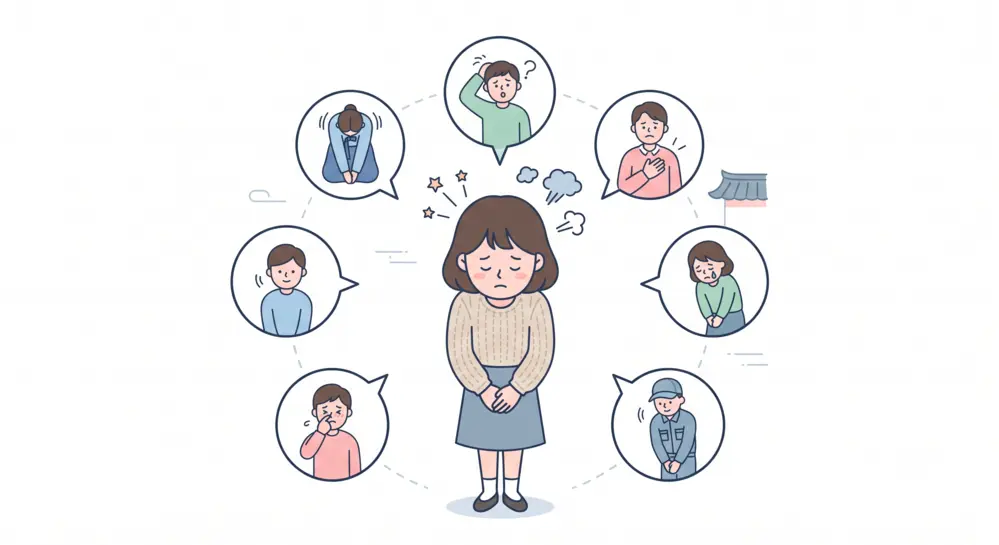
- The Bow (인사): Always bow your head slightly when saying Joesonghamnida or Joesonghaeyo. For serious apologies, a deeper 45-degree bow demonstrates deep remorse.
- Hand Placement (손 위치): Keep your hands gathered politely in front of your body or down at your sides. Avoid putting your hands in your pockets or crossing your arms while apologizing, as this is viewed as extremely arrogant.
- Eye Contact (시선 처리): Avoid staring aggressively directly into an elder’s eyes while apologizing, as it can be interpreted as challenging their authority. A soft, slightly lowered gaze is considered respectful.
Conclusion: Mastering How to Say “Sorry” in Korean
Understanding how to say sorry in Korean properly goes beyond mere vocabulary memorization—it reflects your deep appreciation for Korean culture, social dynamics, and respect for others.
To recap:
- Use 죄송합니다 for business, elders, and formal situations.
- Use 미안해요 for everyday polite interactions.
- Use 미안해 or 미안 for close friends and younger people.
By applying these 7 native expressions and matching your body language to the context, you will navigate any interaction in South Korea with confidence, grace, and natural fluency!