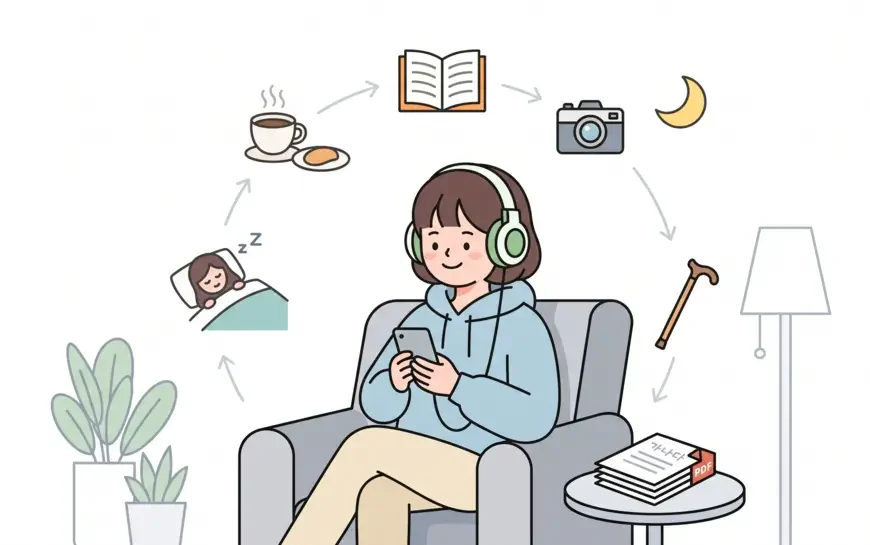
When I first began teaching Korean more than ten years ago, my journey started in a very structured environment. I was working at an immigrant center, helping foreign women prepare for the demanding Korean naturalization examination. Back then, everything revolved around passing tests, memorizing vocabulary lists, and mastering complex grammar structures. Since then, my teaching career has expanded to online lessons with students from all over the world, including the United States, France, Ireland, Singapore, Australia, and Indonesia. Through this decade-long experience, I stumbled upon a fascinating paradox. The students who make the most remarkable, rapid progress are almost never the ones who stress out over textbooks or memorize grammar rules until late at night. Instead, the learners who achieve true, natural fluency are those who approach the Korean language with zero pressure. When you remove the anxiety of formal studying and replace it with pure cultural curiosity, your brain absorbs the language with incredible speed and ease.

The Shift from “Rigid Study” to “Cultural Playground”
Having taught hundreds of learners over the years, I can now spot very early on which students will stay with me for five years or more. These long-term learners have a completely different mindset compared to short-term students. They never view our time together as a tedious lesson or a stressful academic chore. To them, Korean is not a subject to be conquered for a grade; it is a playground where they get to explore the things they genuinely love. Whether we are dissecting the subtle meaning behind a K-Pop song lyric or figuring out why a character in a Korean drama used a specific conversational phrase, they engage out of pure passion. Because there are no exam deadlines or performance pressures weighing on their shoulders, they move at their own comfortable rhythm, which unexpectedly speeds up their overall learning pace.
How “Zero Pressure” Unlocks Natural Fluency
When students stop fearing the possibility of making mistakes, their speaking speed and confidence soar dramatically. Exam-focused learners tend to hesitate awkwardly before uttering a single sentence because they are constantly running an internal spell-check, trying to calculate grammar formulas in real time. On the other hand, my zero-pressure students simply dive headfirst into the conversation. They laugh off their pronunciation slips, test out new slang words or idioms they picked up from television shows, and focus entirely on sharing their thoughts. By eliminating internal pressure, they remove the mental filter that creates self-consciousness. This emotional freedom allows words to flow far more naturally and spontaneously during real-life interactions.
A Real Classroom Story: Nostalgic Dramas and Shared Memories
My role as an educator has naturally evolved over time. I am no longer just an instructor pointing out grammatical errors on a whiteboard; I am a conversational partner creating a warm, comfortable space for human connection. For instance, I have a wonderful long-term student from Indonesia who has a deep love for vintage Korean dramas and classic retro songs from decades past. Since I belong to an older generation myself, I share that exact same nostalgia for old-school media. Whenever our conversation turns to those classic television shows or timeless ballad songs, I get so excited and engaged that I completely lose all track of time. In those moments, I realize that I am enjoying the lesson just as much as my student is. We are simply two people connecting over shared memories and cultural passions. It no longer feels like a formal class at all; it feels like having an incredibly fun phone call with a close friend.
📌 Related Read: Ready to level up your fluency? Start [learning Korean idioms here].
Redefining the Teacher’s Role in Language Acquisition
Creating this kind of relaxed environment requires a shift in how a teacher approaches feedback. Rather than stopping a student every few seconds to correct a minor particle mistake or tense slip, I focus on keeping the conversation flowing smoothly. When a student makes an error, I simply repeat the sentence back to them naturally in corrected Korean as part of our dialogue. This technique helps them absorb proper sentence structures subconsciously without feeling embarrassed or criticized. When students feel safe to express themselves without judgment, their intrinsic motivation takes over. They begin consuming more Korean media outside of class, searching for new expressions on their own simply because they enjoy the process.
Conclusion: Language as Living Cultural Immersion
After spending ten years guiding diverse learners from around the globe, my core philosophy as a language educator is clearer than ever: language cannot be truly mastered if you treat it as a dead subject in a textbook. Language is a living, breathing emotional bridge to a culture and its people. The students who thrive for five years or more are those who integrate Korean into their daily lives as a source of joy rather than an obligation. If you want to speak Korean naturally and fluently, let go of the pressure to be perfect. Release the stress, embrace the Korean media and culture you truly love, and give yourself permission to enjoy every step of the learning journey.
📥 Get your free Basic Korean Vocab PDF below! Did you find this helpful? Leave a quick comment below to share your thoughts—I’d love to hear from you!