During one of my recent interactive online Korean classes, a student brought up a line they heard in a gritty K-drama that completely caught them off guard. The subtitle translated a heated confrontation as accusing someone of wanting to have a thick face, and my student was understandably confused. “Is it about being ugly, or maybe wearing too much makeup?” they asked. I smiled through the screen because this is the exact moment language learning gets exciting. It’s where you step away from the polished, polite textbook dialogues and dive into the raw, expressive heart of everyday street language. In Korea, when we say someone has a tendency to have a thick face, or 낯짝이 두껍다 (Nat-jjak-i du-kkeop-da), we are talking about a very specific kind of behavior: ultimate, unapologetic shamelessness. Today, let’s leave the basic greetings behind and explore this incredibly colorful, raw idiom inside out.
1. Peeling Back the Layers: The Gritty Anatomy of a Thick Face
To truly understand the weight of this phrase, we need to dissect the individual words because the choice of vocabulary here carries a very deliberate emotional sting.
- 낯짝 (Nat-jjak): A raw, slangy, or slightly derogatory way to say “face” (as opposed to the neutral, polite word 얼굴 – Eol-gul).
- 두껍다 (Du-kkeop-da): To be thick or dense.
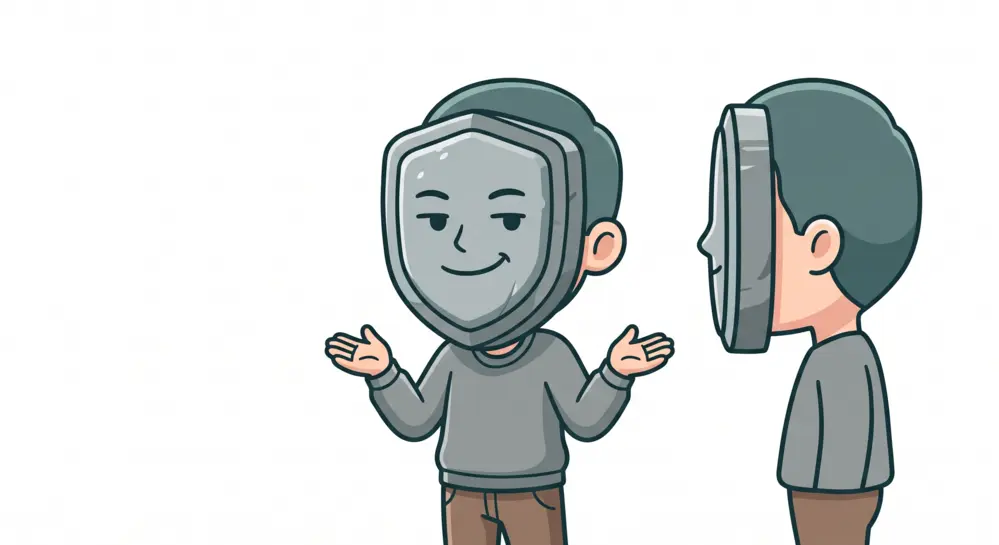
In my view, the choice of 낯짝 instead of 얼굴 is what gives this idiom its sharp edge. You would never use this phrase to complement someone. By combining this gritty word for face with the adjective for thickness, you are visually describing someone whose skin is so incredibly dense that shame, guilt, or embarrassment simply cannot penetrate it. It’s the perfect mental image of a person who does something completely inappropriate, selfish, or rude, yet acts as if absolutely nothing is wrong. Their emotional shield is simply too thick to care about social norms.
2. The Cultural Shield: Why Defending the Face is Everything in Korea
If you want to think like a real Korean speaker, you have to understand the deep-rooted cultural concept of “saving face” (체면 – Cheo-myeon). In modern South Korean society, taking care of how your actions impact the collective harmony of a group is highly valued. People naturally pay close attention to others’ feelings and social cues.
Therefore, consciously choosing to have a thick face means you are actively breaking that social contract. It describes someone who knowingly exploits the kindness of others, cuts lines, demands favors without ever giving anything back, or refuses to apologize when caught in a blatant lie.
My Personal Insight: Having taught hundreds of global students online, I always emphasize that while Western cultures might see a “thick skin” as a positive trait for resilience or survival in business, the Korean nuance of a thick face leans almost entirely negative. It is an observation of a moral flaw—a lack of a conscience. It means you have abandoned your duty to treat others with mutual respect.
3. American Expressions vs. the Korean “Thick Face”
When you are trying to find a match for this energy in American English, a few common phrases come to mind. However, notice how the psychological framing shifts slightly between the two cultures.
To be brassy / brazen
This is probably the closest psychological match. “Brazen” implies a bold, shameless behavior done in the open without any fear of judgment. If someone steals credit for your hard work at the office right in front of your eyes, an American would call it brazen, and a Korean would definitely target their thick face.
What a nerve! / The audacity!
In daily American life, when someone shocks you with their rude and entitled behavior, you often exclaim, “The audacity of this guy!” The Korean phrase functions in the exact same emotional space, pointing out the shocking lack of social boundaries.
Thick-skinned
Be careful here! As mentioned, if an American friend tells you, “You need to be thick-skinned to survive in this industry,” they are giving you encouraging advice to not take criticism personally. But if you tell a Korean friend they have a thick face, you might end up in a serious argument!
4. When and How to Call Out a Thick Face Safely
Since this phrase carries a highly charged, informal punch, you need to understand the social boundaries of using it. Here is my practical advice on how to handle it in conversation.
- Never Use It Upward: Avoid using this expression when talking about seniors, bosses, or strangers to their faces, no matter how shameless they are. Because it contains the slang word 낯짝, saying it directly to someone is considered a high-level verbal attack.
- The Power of Third-Person Venting: This idiom is most commonly used when venting to a trusted friend about a third party. It’s perfect for those casual, private group chats when you need to let out steam about a self-centered acquaintance.
- Keep it Grammatically Natural: Keep the body part as the subject. Do not say “He has a thick face” in a literal English translation structure.
- ⭕ 그 사람은 진짜 낯짝도 두껍지. (As for that person, the face is truly thick too. – Natural and impactful)
5. Real-Life Scenarios: Spotting a Thick Face in the Wild
Let’s look at two realistic, everyday situations to see exactly how native speakers integrate this idiom into their casual texting and conversations.
Scenario A: The Relentless Borrower
- A: 민우가 또 돈 빌려달라고 연락 왔어. 저번에 빌려 간 것도 안 갚았으면서. (Minwoo texted me again asking to borrow money. He didn’t even pay back what he borrowed last time.)
- B: 와, 진짜 낯짝이 두껍다. 어떻게 양심도 없이 매번 그러냐? 절대 빌려주지 마. (Wow, he really has a thick face. How can he do that every time without a conscience? Never lend it to him.)
Scenario B: The Workplace Credit-Snatcher
- A: 이번 프로젝트 내가 밤새워서 다 기획했는데, 김 대리가 부장님 앞에서는 자기가 다 한 것처럼 말하더라. (I stayed up all night planning this entire project, but Assistant Manager Kim spoke in front of the director as if he did it all himself.)
- B: 진짜? 와, 대단하다. 낯짝이 얼마나 두꺼우면 소름 돋게 저런 거짓말을 하냐. (Really? Wow, unbelievable. Just how thick is his face to tell a creepy lie like that.)
Conclusion: Finding Your Own Golden Mean of Confidence
At the end of the day, diving into these unfiltered cultural expressions is what makes language learning feel truly alive. It shows you the unique, invisible boundaries that a society draws around behavior and respect. In my online lessons, I always love seeing that lightbulb moment when a student realizes that words aren’t just tools for information—they are mirrors of a culture’s collective soul.
But let’s be real for a moment. Navigating a world where you constantly have to protect yourself from people who are unapologetically selfish can feel incredibly draining. If you ever find yourself exhausted by the noise of dealing with people who seem to have a thick face, please remember that you don’t have to carry that stress alone. Whenever you need a cozy, safe space to step back, take a deep breath, and just enjoy learning at your own comfortable pace, always feel free to come back to my blog. Let this little corner be your quiet sanctuary to ground your mind and realign your goals, completely stress-free.
The next time you see someone act with total disregard for others, take a slow breath, recognize it for what it is, and protect your inner peace. Keep practicing, stay deeply curious, and remember: 시작이 반이다 (Starting is half the battle)!
Reference & Official Source:
For official definitions and standard Korean language guidelines, feel free to visit the [National Institute of Korean Language].