A few weeks ago, one of my intermediate students walked into the classroom proudly holding a massive, expensive trendy tumbler. When I asked him why he bought it, he sheepishly confessed that a classmate praised it as the absolute best brand on the market—even though he normally never uses tumblers because they are too heavy to carry around! I chuckled and told him, “You should probably think a bit more carefully before making a purchase next time!” In Korean, we have a wonderfully descriptive expression for people who are easily swayed by others’ opinions, recommendations, or sudden marketing trends. We say that they to have thin ears, or more accurately, their ears are thin (귀가 얇다).
As a Korean instructor with over a decade of experience, I see this exact scenario play out all the time in the classroom. Moving past basic grammar and into the world of everyday expressions like this is where you stop sounding like a textbook and start sounding like a real native speaker. Let’s break down this incredibly common phrase so you can understand the unique cultural psychology behind it.
1. The Linguistic Breakdown: What It Means “To Have Thin Ears”
When we look at the literal anatomy of this expression, it is simple yet highly imaginative.
- 귀 (Gwi): Ear / Ears
- 얇다 (Yalb-da): To be thin (used for flat objects like paper, books, or clothes)
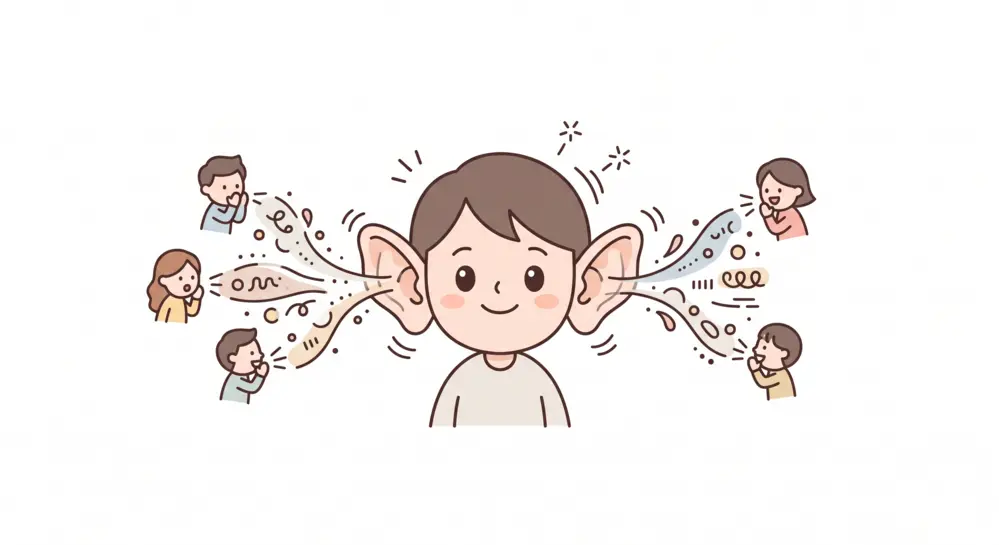
As with most advanced Korean figurative expressions, if you tell someone their ears are physically thin, it makes no sense. The phrase uniquely functions as a character profile. When you say a person to have thin ears, you mean they lack a strong internal filter. They listen to what someone says, and instead of processing it critically, the information passes right through their “thin” protective barrier, immediately impacting their decisions.
In my observation, this phrase is most frequently used in contexts involving shopping, financial investments, or falling for harmless workplace gossip. It perfectly captures that moment of instant regret after you let someone talk you into something you didn’t actually need.
2. Cultural Metaphors Behind the Phrases “To Have Thin Ears”
To fully grasp the essence of this phrase, we need to examine why the concept of “thinness” is linked to being gullible in Korean culture. In the Korean language, objects that are thin are inherently vulnerable to environmental forces—they bend easily, tear quickly, and shake violently when the wind blows.
This directly connects to another fascinating Korean linguistic concept: 바람을 넣다 (To blow wind into someone). In Korea, when someone tempts you, hypes you up, or instigates you to do something impulsive, we say they are “blowing wind” into you.
Teacher’s Perspective: Think of a person’s ears as sails on a boat. If your ears are thick and sturdy, the chaotic winds of other people’s opinions won’t alter your direction. But if you to have thin ears, even the slightest breeze of a recommendation or a rumor will cause your entire mind to shake and veer off course. This deep structural connection between “wind” (temptation) and “thinness” (vulnerability) is a beautiful example of how poetic the Korean language can be.
3. English Equivalents to the Notion “To Have Thin Ears”
When I explain this to my American students, they instantly look for equivalents in English. While the core psychological meaning is identical, the emotional flavor carries an important distinction that you should be aware of.
Gullible
This is the most common dictionary translation. However, “gullible” in English can sometimes sound slightly harsh, implying that the person is naive or lacking intelligence. In contrast, 귀가 얇다 is much milder. It emphasizes a soft-hearted nature rather than a lack of brainpower.
Easily swayed / A pushover
To say someone is easily swayed captures the movement of the thin ear bending to the wind. However, a “pushover” implies someone who cannot stand up for themselves in a conflict. 귀가 얇다 doesn’t necessarily mean you lose arguments; it just means you are easily convinced that a new idea or product is amazing.
“My ears were burning” vs. “To have thin ears”
A common point of confusion for American learners is mixing this up with the English phrase “my ears are burning” (which means someone is talking about you behind your back). Remember, the Korean expression has nothing to do with rumors about you, but rather how easily you believe rumors about other things.
4. How “To Have Thin Ears” Can Affect Your Daily Korean Conversations
As your seasoned guide through the nuances of Korean communication, I must emphasize that while this phrase is incredibly useful, you must apply it with care. Here is my strategic advice on how to deploy this idiom in real life safely and naturally.
Tip 1: Use it as a Safe Form of Self-Deprecation
Koreans highly value humility. If you went to a market and bought a useless souvenir because the seller was smooth-tongued, you can say:
- ⭕ 제가 워낙 귀가 얇아서 그냥 사 버렸어요. (I have such thin ears, so I just bought it.)
This shows high cultural emotional intelligence. It softens the situation and makes you look incredibly relatable.
Tip 2: Be Careful When Describing Others
Because it implies a slight lack of firm resolution, you should generally avoid using it directly toward superiors, bosses, or elders. Telling your Korean manager, “부장님은 귀가 얇으시네요” (Manager, you have thin ears) will likely end in an incredibly awkward silence. Keep it reserved for friends, peers, or close younger students.
Tip 3: Master the Correct Sentence Pattern
Remember, do not say “나는 얇은 귀를 가지고 있다” (I possess thin ears). Keep the body part as the clear grammatical subject:
- ⭕ 저는 귀가 얇은 편이에요. (I am on the side of having thin ears.)
5. Real-Life Dialogues
Let’s look at how native Korean speakers smoothly weave this idiom into their everyday casual text messages and verbal interactions.
Dialogue A: The Impulse Shopper
- A: 나 어제 인스타 광고 보고 10만 원짜리 다이어트 영양제 결제했어. 진짜 효과 좋대. (I saw an Instagram ad yesterday and paid 100,000 won for a diet supplement. They said it really works.)
- B: 너 또 시작이네. 진짜 귀가 얇아서 걱정이다. 그거 다 과장 광고야. (There you go again. I’m truly worried because you have such thin ears. That’s all exaggerated advertising.)
Dialogue B: Changing Plans Based on Gossip
- A: 주말에 새로 오픈한 카페 가려고 했는데, 친한 동료가 거기 별로라고 해서 그냥 예약 취소했어. (I was planning to go to that newly opened cafe this weekend, but a close colleague said it wasn’t that good, so I just canceled the reservation.)
- B: 직접 가 보지도 않고 취소한 거야? 너도 참 귀가 얇은 편이구나. (You canceled it without even going yourself? You are definitely on the side of having thin ears.)
Conclusion: stand Firm as You Learn Korean
In my years of teaching, I have encountered many language learners who feel their ears are too thin when it comes to learning strategies—they constantly switch methods because someone recommended a new app or a different textbook. My expert advice to you is to trust your own pace. While it is wonderful to possess an open mind, make sure your linguistic foundation is thick enough to withstand the noise.
Using phrases like 귀가 얇다 correctly is what transforms you from an outsider into someone who truly understands the heartbeat of Korean society. So, whenever you find yourself getting easily swayed by flashy marketing or overwhelmed by the opinions of others, and you feel like you are beginning to have thin ears, come back to my blog. Let this space be your personal anchor to slow down, recenter your mind, and regain your firm resolution.
The next time you find yourself instantly convinced by a friend’s dramatic recommendation, take a deep breath, smile, and think about your ears. Keep studying, protect your 주관 (personal opinion), and remember that every authentic phrase you master brings you closer to the cultural fluency you deserve!