When I do online Korean lessons with my students, we often end up chatting about all sorts of personal stories and daily life. But don’t worry—I have a golden rule: everything we talk about stays strictly between us! Protecting my students’ privacy is super important to me, and thanks to the deep trust we share, I can confidently say that I have a heavy mouth (입이 무겁다). In Korea, we actually weigh a person’s lips on a scale of trust. While a trustworthy person is praised for having a heavy mouth, someone who easily spills secrets or spreads rumors is said to have a light mouth (입이 가볍다). Today, let’s take a casual and fun look at these two super common, contrasting expressions!
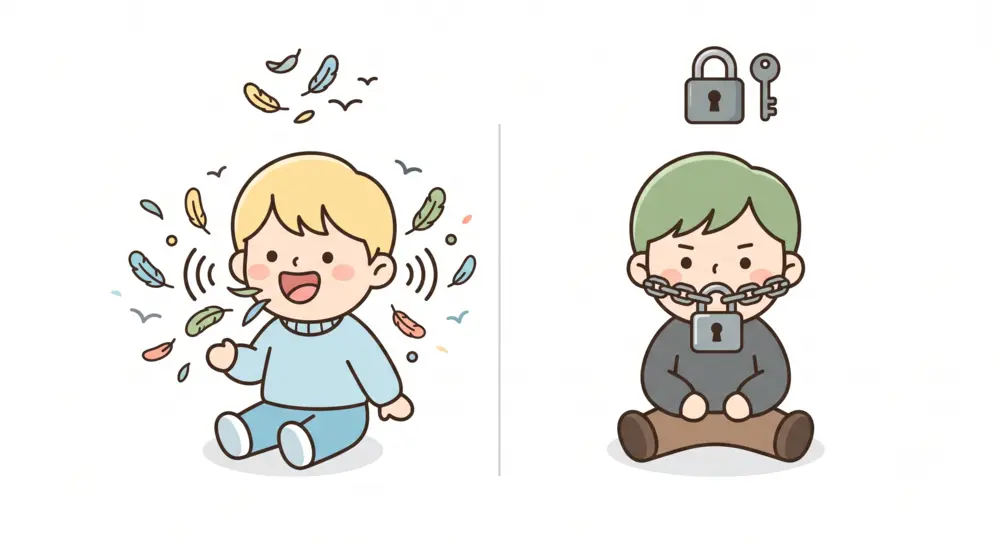
1. The Scales of Speech: Visualizing “입이 가볍다” and “입이 무겁다”
To master these idioms, it helps to visualize a classic balancing scale where information acts as the physical weight.
- 입 (Ip): Mouth
- 가볍다 (Gabeop-da): To be light
- 무겁다 (Mugeop-da): To be heavy
When you describe a person as someone whose 입이 가볍다, it means their lips lack the physical density required to hold information inside. The moment a piece of gossip lands in their ears, their mouth swings open effortlessly, and the secret escapes into the world. On the polar opposite end, when a person’s 입이 무겁다, their mouth acts like a heavy, reinforced steel bank vault. It takes immense effort, trust, and the proper emotional key to get them to open up, ensuring that whatever secret you place inside remains locked away from the public eye forever.
2. The Social Premium on silence: Why the Weight of or Words Matters
In the fast-paced, deeply interconnected web of modern South Korean society, sharing information is a primary currency for building relationships. However, this creates a fascinating social paradox.
Because communities, workplaces, and school networks in Korea are tightly knit, a rumor can travel across an entire social circle in the blink of an eye. Therefore, someone whose 입이 가볍다 is quickly flagged as a social liability. People will smile and engage in casual small talk with them, but they will instinctively withhold any deeply personal or strategic information.
Teacher’s Insight: Conversely, being praised as someone whose 입이 무겁다 is one of the highest social compliments you can receive in Korea. It signals to your peers, seniors, and managers that you possess immense self-restraint and emotional maturity. In Korean corporate and personal spheres, a heavy mouth is a silent magnet that naturally attracts loyal friendships and high-level professional responsibilities.
3. Navigating the English Equivalents with Care
When my Western students try to find matching terminology, they often reach for direct insults or rigid phrases. Let’s look at how the conversational flavor shifts between English and Korean.
Blabbermouth vs. 입이 가볍다
An English speaker might call someone a “blabbermouth” or a “gossip.” While the meaning aligns, “blabbermouth” can sound incredibly confrontational. The Korean phrase 입이 가볍다 allows you to describe this flaw with a bit more objective, observational distance, focusing on the character trait rather than just slinging an insult.
“Loose lips sink ships” vs. 입이 가볍다
This historical English idiom captures the danger of leaking secrets beautifully. However, it’s typically used as a warning for large organizations or high-stakes scenarios. The Korean idiom is used daily for even the smallest matters, like revealing what someone bought for lunch.
Tight-lipped / A Vault vs. 입이 무겁다
If a friend in America is fantastic at keeping secrets, you might say, “She’s a vault,” or “He’s tight-lipped.” These phrases perfectly match the energy of having a heavy mouth. It conveys that beautiful sense of safety and unyielding security.
4. How to Talk About the Weight of Someone’s Lips Professionall
To weave these phrases seamlessly into your linguistic repertoire, you need to navigate the structural framework of Korean sentences. Here are two critical guidelines to ensure you sound polished.
Tip 1: Avoid Direct Transliteration
Never try to adapt the phrase into an English adjective format like “그는 가벼운 입을 가졌어” (He possesses a light mouth). This breaks the organic rhythm of the language. Instead, ensure the body part remains the subject:
- ⭕ 그 사람은 입이 참 가벼워요. (As for that person, the mouth is truly light.)
- ⭕ 우리 부장님은 입이 정말 무거우신 편이야. (As for our manager, the mouth is on the truly heavy side.)
Tip 2: Gauge the Emotional Temperature
Saying someone’s 입이 가볍다 is fundamentally a critique of their reliability. Therefore, never say it directly to a person unless you are very close friends and are sharing lighthearted banter. On the flip side, announcing that someone’s 입이 무겁다 is a wonderful way to praise a colleague or build up a friend’s reputation in front of others.
5. Real-Life Dialogues
Let’s look at exactly how native speakers balance these weights in everyday verbal exchanges.
Dialogue Scenario A: Warning a Friend About a Leak
- A: 수현아, 나 이번에 이직 준비하는 거 다른 사람들한테는 당분간 비밀로 해줘. (Suhyun, please keep it a secret from others for the time being that I’m preparing to change jobs this time.)
- B: 당연하지! 나 입 엄청 무거운 거 알잖아. 내 선에서 무조건 비밀 보장할게. (Of course! You know my mouth is incredibly heavy. I will absolutely guarantee the secret on my end.)
Dialogue Scenario B: Regretting a Shared Secret
- A: 지수한테만 살짝 말한 비밀인데, 벌써 팀원들이 다 알고 있더라. 진짜 속상해. (It was a secret I only whispered gently to Jisu, but all the team members already know about it. I’m truly upset.)
- B: 아고, 지수가 원래 입이 좀 가벼운 편이잖아. 다음부터 중요한 얘기는 지수한테 절대 하지 마. (Oh dear, Jisu originally has a bit of a light mouth. Don’t ever tell important stories to Jisu from now on.)
Conclusion: Protect Your Trust and Enjoy Learning
At the end of the day, learning Korean isn’t just about memorizing vocabulary. It’s really about understanding how people build trust and connect with one another. Just like the close, confidential bond I share with my online students, knowing whether someone’s mouth is heavy or light helps us navigate our relationships much better in daily life.
Let’s face it—it can be really exhausting when gossip spreads too fast or when you encounter people who have a light mouth. Whenever you feel tired of the noise around you, or if you just want a cozy, safe space to relax and learn at your own comfortable pace, always feel free to come back to my blog. Think of this corner as your personal sanctuary where you can slow down, protect your peace of mind, and just enjoy the journey completely stress-free.
The next time a friend trusts you with a secret, try to be that reliable confidant with a beautifully heavy mouth. Keep practicing, stay curious, and remember: 시작이 반이다 (Starting is half the battle)!